



The Mana Wāhine Claim, also known as WAI 381, is a significant claim brought before the Waitangi Tribunal in Aotearoa New Zealand. It addresses the systematic and historical breaches of Te Tiriti o Waitangi (the Treaty of Waitangi) by the Crown in relation to Māori women (wāhine Māori). Here’s an overview of the history and development of the claim:
Background
“Mana wāhine” refers to the unique spiritual and cultural authority, status, and power of Māori women, which is deeply rooted in te ao Māori (the Māori world view). Traditionally, wāhine Māori held central roles in iwi and hapū as leaders, decision-makers, and protectors of whakapapa (genealogy) and whenua (land).
However, following colonisation and the imposition of Western systems, the roles, status, and rights of Māori women were significantly undermined, both by patriarchal colonial structures and by the marginalisation of Māori culture and institutions.
Origins of the Claim (WAI 381)
The Mana Wāhine Inquiry stems from WAI 381, initially filed in 1993 by Dr. Ngahuia Te Awekotuku and other prominent Māori women. The claim argued that the Crown had failed to uphold the rights and responsibilities guaranteed to wāhine Māori under Te Tiriti o Waitangi.
The claim was later consolidated with several others, all addressing similar concerns about the systemic discrimination, marginalisation, and loss of mana and rangatiratanga (chiefly authority) of Māori women.
Key Issues Raised
The claimants allege that Crown actions and policies have:
- Undermined traditional roles of Māori women, diminishing their authority and leadership in Māori and national contexts.
- Excluded wāhine Māori from decision-makingprocesses, including in Treaty settlement negotiations and political representation.
- Disproportionately affected Māori women through social and justice policies, especially in areas like health, education, welfare, and incarceration.
- Failed to actively protect and promote mana wāhinein accordance with Te Tiriti o Waitangi principles.
In 2019, the Waitangi Tribunal officially launched the Mana Wāhine Kaupapa Inquiry. This marked a major step in acknowledging the systemic issues facing wāhine Māori.
The inquiry involves hearing from a broad group of claimants, experts, and community leaders.
It examines how Crown breaches of Te Tiriti have impacted wāhine Māori over time and what redress or transformation might look like.
As of 2025, the inquiry is still in progress. It is expected to produce a detailed report with findings and recommendations for the Crown.
The Mana Wāhine Claim is regarded as one of the most important kaupapa (policy) inquiries, as it intersects with issues of gender, colonisation, racism, and Treaty justice.
It represents a platform for wāhine Māori to reclaim their voices, leadership roles, and tino rangatiratanga.
The Mana Wāhine Claim is not just about historical injustices—it is also about the future. It seeks to:
- Restore the rightful place of Māori women in society.
- Reimagine Crown-Māori relationships through a gender-equitable and culturally grounded lens.
- Highlight the interconnectedness of identity, culture, and justice in Aotearoa New Zealand.
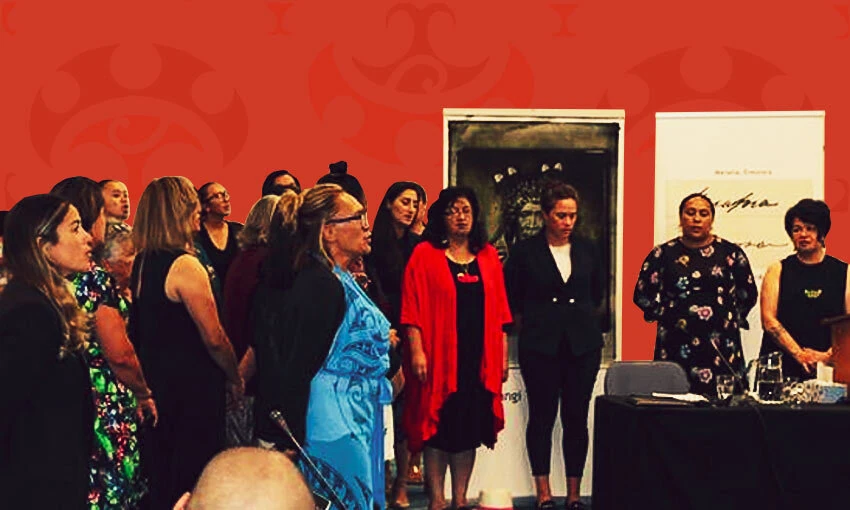
Wai 2700 – the Mana Wāhine Kaupapa Inquiry – will hear outstanding claims which allege prejudice to wāhine Māori as a result of Treaty breaches by the Crown. These claims extend across many fields of Crown policy, practice, acts, and omissions, both historical and contemporary, and of related legislation, service provision, and State assistance.
In a memorandum dated 20 December 2018, the chairperson of the Tribunal formally initiated the Mana Wāhine Kaupapa Inquiry and appointed Judge Sarah Reeves as the presiding officer. On 7 August 2019, the chairperson appointed Dr Robyn Anderson, Dr Ruakere Hond, and Kim Ngarimu as panel members to the inquiry. Professor Linda Tuhiwai Smith was subsequently appointed as a panel member on 23 November 2020.
The presiding officer confirmed the scope for the inquiry in a memorandum dated 22 July 2020, with the central question being the alleged denial of the inherent mana and iho of wāhine Māori and the systemic discrimination, deprivation, and inequities experienced as a result. Four pou frame the inquiry: rangatiratanga, whenua, whakapapa/whānau, and whai rawa.
The Tribunal conducted initial hearings to provide a tūāpapa (foundation) for the wider inquiry. These hearings focused on the tikanga of mana wāhine and the pre-colonial understanding of wāhine in te ao Māori. Claimant lawyers produced a guide for witnesses in these hearings, which the Tribunal supported. Called ‘Te Arataki’, it posed questions as prompts for witnesses under the following four themes:
- Atua whāea and tipuna whāea and the blueprint for mana wāhine.
- Te ira wāhine and te ira tangata – the relationality and balance of wāhine and tāne.
- Te mana o te wāhine in Te Ao Māori, Māori society, and rangatira wāhine.
- Wāhine rangatiratanga over whenua, whakapapa/whānau, whai rawa, and mātauranga.
To ensure wide regional coverage, the tūāpapa hearings were held in Kerikeri (February 2021), Ngāruawāhia (February 2021), Whangārei (July 2021), Whakatāne (July 2022), Lower Hutt (August 2022), and Christchurch (September 2022).
In December 2023, the Tribunal announced the pre-release of Te Kete Pūputu: The Online Guide to the Mana Wāhine Tūāpapa Evidence.
The online guide is not a Tribunal report, and therefore does not present the views of the Waitangi Tribunal or make any findings or recommendations on the evidence collated. Rather, the guide gathers and collates the mātauranga that witnesses shared with the Tribunal, enabling users to explore the evidence and kōrero – including key themes, key quotes, whakataukī, and images – themselves.
The Tribunal released an exploratory scoping report in July 2020. Exploratory scoping reports are prepared by Waitangi Tribunal Unit research staff to assist the Tribunal and parties to consider and address the evidential needs of an inquiry.
In April 2021, following submissions from parties, the presiding officer confirmed the following six research projects would be commissioned by the Waitangi Tribunal. In June 2023 the presiding officer confirmed an additional project entitled ‘Takapou Whāriki’ would also be commissioned. Takapou Whāriki is an audio-visual research project gathering oral accounts by wāhine Māori, including those involved in the Mana Wāhine Inquiry.
The Tribunal-commissioned research programme is advancing and (as of September 2023) all reports are due for completion by July 2024.
image: Claimants to the Waitangi Tribunal’s Wai 2700 – Mana Wāhine inquir at Terenga Parāoa marae in Whangārei


