


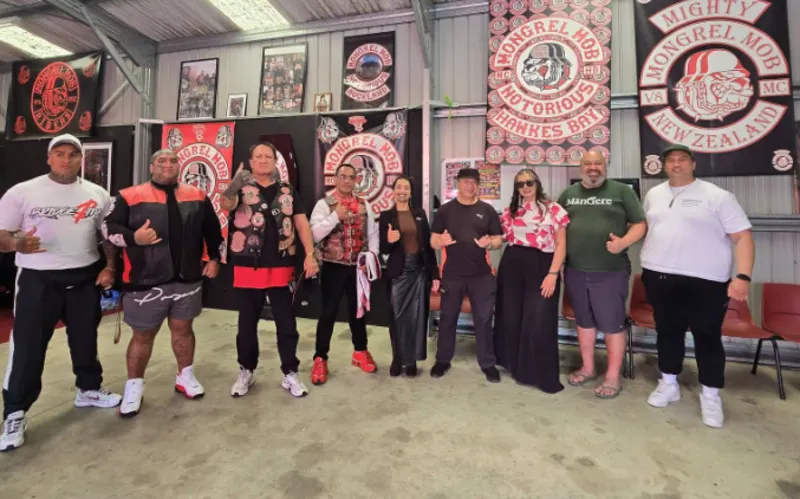

A photograph featuring Mongrel Mob members, whānau and politicians has sparked a heated election campaign controversy, with questions now being raised about political engagement, democracy and whether gang-affiliated communities should be part of conversations about the future of Aotearoa.
Community advocate and long-time youth worker Harry Tam joins Radio Waatea’s Dale Husband to discuss the meeting at the centre of the controversy, the political reaction and the wider issues facing communities affected by poverty, addiction and gang involvement.
The controversy follows reporting by RNZ and Stuff about a meeting attended by representatives associated with the Mongrel Mob and politicians from the Greens and Te Pāti Māori.
The meeting has drawn criticism from National, while the Greens have defended their involvement.
A Photograph That Sparked a Political Storm
What began as a meeting involving politicians and members of a gang-affiliated community has become a national political talking point during the final weeks of the 2026 election campaign.
Photographs circulating from the gathering have prompted debate about whether politicians should engage with people connected to gangs and what such engagement means for public confidence.
For critics, the concern centres on the message political leaders send when they attend meetings involving gang members, particularly when community safety and organised crime are significant election issues.
Those defending the engagement argue that politicians have a responsibility to hear from communities affected by government policies, including people whose backgrounds or affiliations may be controversial.
The debate has raised a broader question about the difference between engaging with a community and endorsing the conduct of individuals within it.
Harry Tam: What Really Happened at the Meeting?
Tam, whose work has included youth development, rehabilitation and advocacy involving gang-affiliated whānau, is at the centre of the discussion.
Speaking with Dale Husband, he addresses the circumstances surrounding the meeting and the reaction to the photograph that has attracted political attention.
The interview examines whether the public controversy accurately reflects the purpose of the gathering and whether the debate has become more focused on the identities of those attending than the issues being discussed.
It also provides an opportunity to explore why politicians and community advocates consider engagement with marginalised communities important, even when those conversations attract criticism.
Democracy, Gang Affiliation and the Right to Be Heard
One of the central issues raised by the controversy is whether gang affiliation should influence the willingness of politicians to meet with members of the public.
In New Zealand, eligible voters do not lose their democratic rights simply because they belong to a gang.
That distinction is important in an election campaign, where political parties are seeking support and discussing policies affecting communities across the country.
However, questions about political engagement also sit alongside legitimate concerns about gang-related offending, intimidation and community safety.
The challenge for political leaders is to demonstrate that engagement can occur without minimising criminal behaviour or overlooking the experiences of people harmed by it.
Are the Real Social Issues Being Lost?
Beyond the political controversy, Tam’s work raises questions about the underlying circumstances facing some gang-affiliated individuals and their whānau.
Poverty, housing insecurity, addiction, intergenerational disadvantage and barriers to employment are among the issues that frequently feature in wider discussions about rehabilitation and community wellbeing.
For advocates working directly with affected communities, addressing these pressures is an important part of preventing harm and creating pathways away from offending.
The controversy also highlights the difficulty of having constructive conversations about rehabilitation when public attention becomes concentrated on photographs, political associations and accusations between parties.
Effective community safety responses require accountability for offending alongside credible prevention, rehabilitation and support services.
Māori Whānau and the Wider Debate
For Māori communities, the discussion has additional significance because gang involvement, criminal justice policy and social disadvantage can have far-reaching consequences for whānau.
The issues extend beyond the people directly involved in gangs to tamariki, rangatahi, parents and wider communities.
Questions about access to housing, education, employment, addiction treatment and culturally appropriate rehabilitation remain relevant regardless of which political party forms the next government.
The challenge is finding approaches that improve safety while supporting whānau seeking positive change.
Beyond the Headlines
With Election Day approaching on November 7, the political fallout from the meeting has become another point of contention between parties.
But the discussion with Harry Tam raises a wider question about how Aotearoa engages with communities that are frequently the subject of political debate.
Should politicians avoid controversial groups altogether, or is direct engagement necessary to understand the issues affecting those communities?
And how can those conversations take place while maintaining clear expectations around accountability, public safety and the rule of law?
Harry Tam joins Dale Husband on Radio Waatea to discuss the meeting, the political reaction and what he believes New Zealanders need to understand about the people and whānau at the centre of the controversy.
#RadioWaatea #WaateaNews #HarryTam #DaleHusband #GangHui #MongrelMob #Election2026 #NZElection2026 #TePātiMāori #GreenPartyNZ #NationalParty #NZPolitics #MāoriPolitics #Democracy #VotingRights #CommunitySafety #GangRehabilitation #SocialJustice #WhānauWellbeing #Rangatahi #AddictionRecovery #CrimePrevention #Aotearoa


