


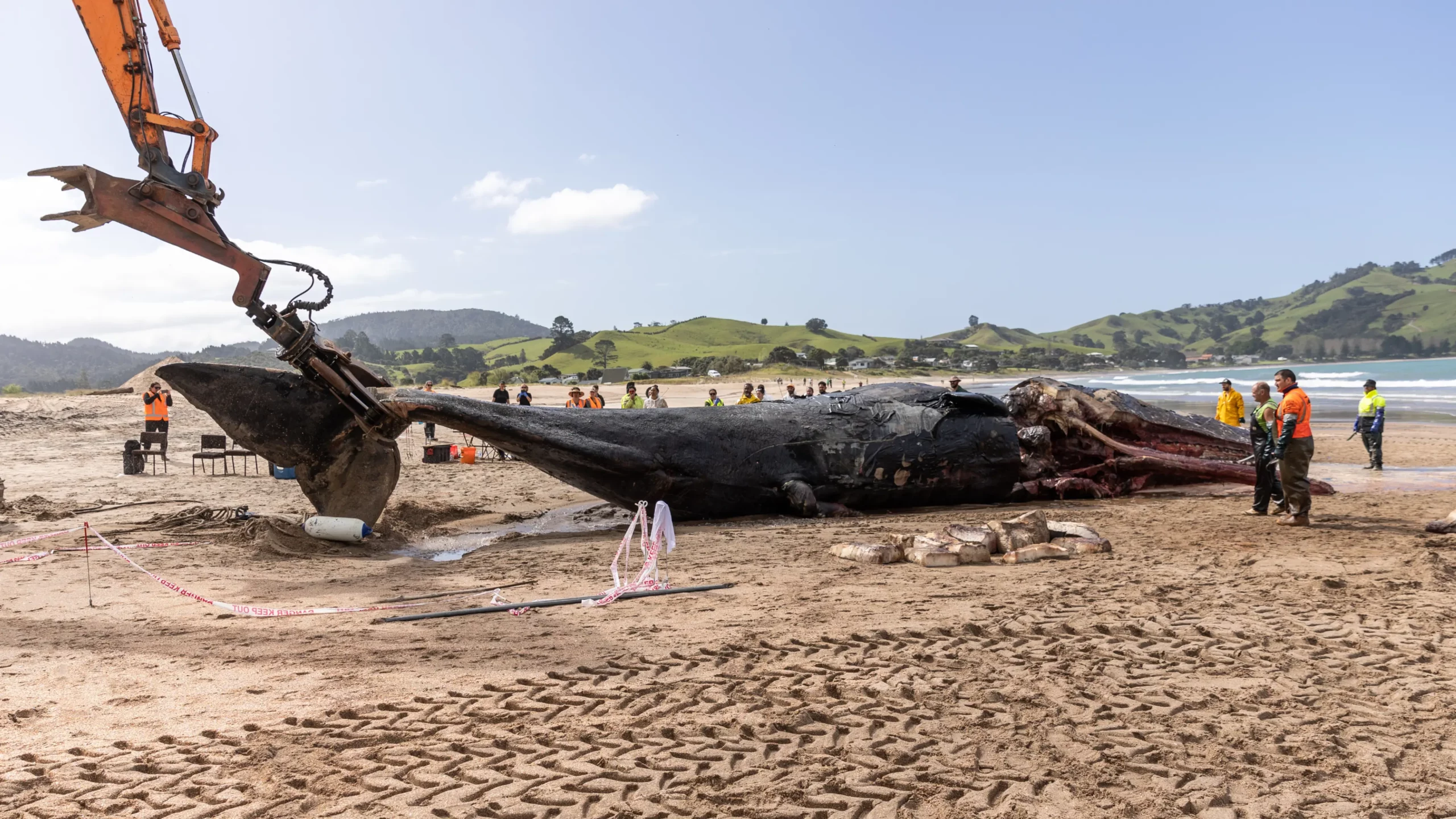

A powerful new documentary series is shining a light on the enduring relationship between Māori, the environment and traditional knowledge, as Whales, Rats & Kauri begins its seven-part release through RNZ following its acclaimed premiere at the Doc Edge Festival.
Co-directed and produced by Kim Webby, the series follows the Parata whānau as they work to revive traditional knowledge surrounding whales, environmental stewardship and Māori conservation practices, while navigating the challenges of protecting Aotearoa’s unique natural heritage.
The documentary weaves together three seemingly different stories—whales, introduced predators and kauri forests—to explore a common theme: the interconnectedness of people and the environment through the lens of kaitiakitanga.
At the heart of the series is the Parata whānau’s exploration of customary whale harvesting knowledge. Rather than focusing on commercial harvesting, the documentary examines the cultural, spiritual and environmental relationships Māori have maintained with whales for generations, highlighting the responsibilities that accompany those traditions.
The series also examines the impact of invasive species, including rats, on native ecosystems, alongside the ongoing struggle to protect kauri forests from kauri dieback disease. Together, these stories illustrate how traditional Māori knowledge and modern science can work alongside one another to restore ecosystems and strengthen conservation efforts.
Premiering at the Doc Edge Festival, Whales, Rats & Kauri received praise for its thoughtful storytelling and its willingness to tackle complex environmental issues through a distinctly Māori perspective.
Now reaching a wider audience through RNZ, the seven-part series offers viewers an opportunity to engage with conversations about biodiversity, Indigenous knowledge and the future of conservation in Aotearoa.
Kim Webby says the project was driven by a desire to tell stories that reflect the deep relationships Māori have with the natural world, while documenting the work of whānau who are actively protecting and restoring those connections for future generations.
The documentary arrives at a time when Indigenous knowledge is receiving increasing recognition internationally as an important contributor to environmental management and climate resilience. Across New Zealand, iwi and hapū continue to play leading roles in habitat restoration, species recovery and freshwater management, bringing mātauranga Māori together with scientific research.
For the Parata whānau, the story is ultimately one of continuity—ensuring knowledge handed down through generations is not lost, but instead adapted and shared with the next generation of kaitiaki.
As audiences tune into the series, Whales, Rats & Kauri offers more than a documentary about conservation. It is a reminder that caring for the environment is inseparable from caring for culture, whakapapa and the future of Aotearoa.
#Tags:
#RadioWaatea #WaateaNews #WhalesRatsAndKauri #KimWebby #RNZ #DocEdge #ParataWhānau #Kaitiakitanga #MātaurangaMāori #Whales #Kauri #Conservation #Environment #TeAoMāori #Biodiversity #ClimateAction #IndigenousKnowledge #Whakapapa #Documentary #Aotearoa #MāoriNews


