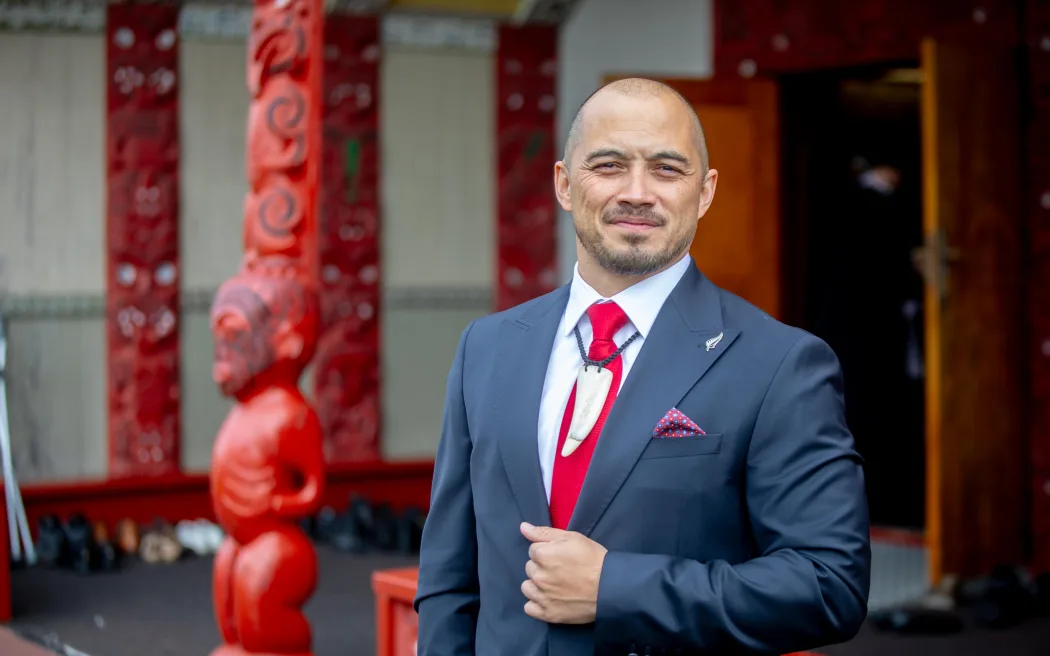

Labour’s newly announced candidate for Te Tai Hauāuru, Te Pūoho Katene, says he wants to bring renewed hope and transformational thinking to politics as competition for the Māori seats begins to intensify ahead of the next election.
A Fulbright scholar with a background in governance and Māori development, Katene says his decision to stand comes from a desire to help create long-term opportunities for whānau and strengthen Māori aspirations across the electorate.
Te Tai Hauāuru stretches across a large section of the North Island, covering diverse iwi and communities from Taranaki through Whanganui, Rangitīkei, Manawatū and into Wellington. Katene says the electorate represents both deep responsibility and opportunity, describing it as a rohe rich in whakapapa, resilience and leadership.
He says restoring hope in politics means delivering practical outcomes that people can see in their everyday lives — including secure housing, meaningful employment, accessible healthcare and pathways for rangatahi to succeed.
Katene believes Māori-led economic development will play a key role in improving social outcomes. Drawing on his governance experience, he says Māori economic growth should not only generate wealth, but also strengthen whānau wellbeing, cultural identity and intergenerational opportunity.
He says stronger investment in Māori enterprise, innovation, education and regional development can help communities become more self-determining while addressing persistent inequities.
Katene also points to the importance of building policies that reflect the realities facing Māori communities, particularly as many whānau continue to navigate rising living costs, housing pressures and gaps in health services.
His long-term vision for Māori development includes growing the Māori economy, increasing Māori representation in leadership and decision-making, and ensuring future generations can thrive both culturally and economically.
If elected, Katene says he wants to contribute to a politics focused on transformation rather than division, with greater emphasis on collaboration, long-term planning and empowering Māori communities to lead their own solutions.
His candidacy adds another high-profile name to what is shaping as a closely watched contest for Te Tai Hauāuru and the wider Māori political landscape.