


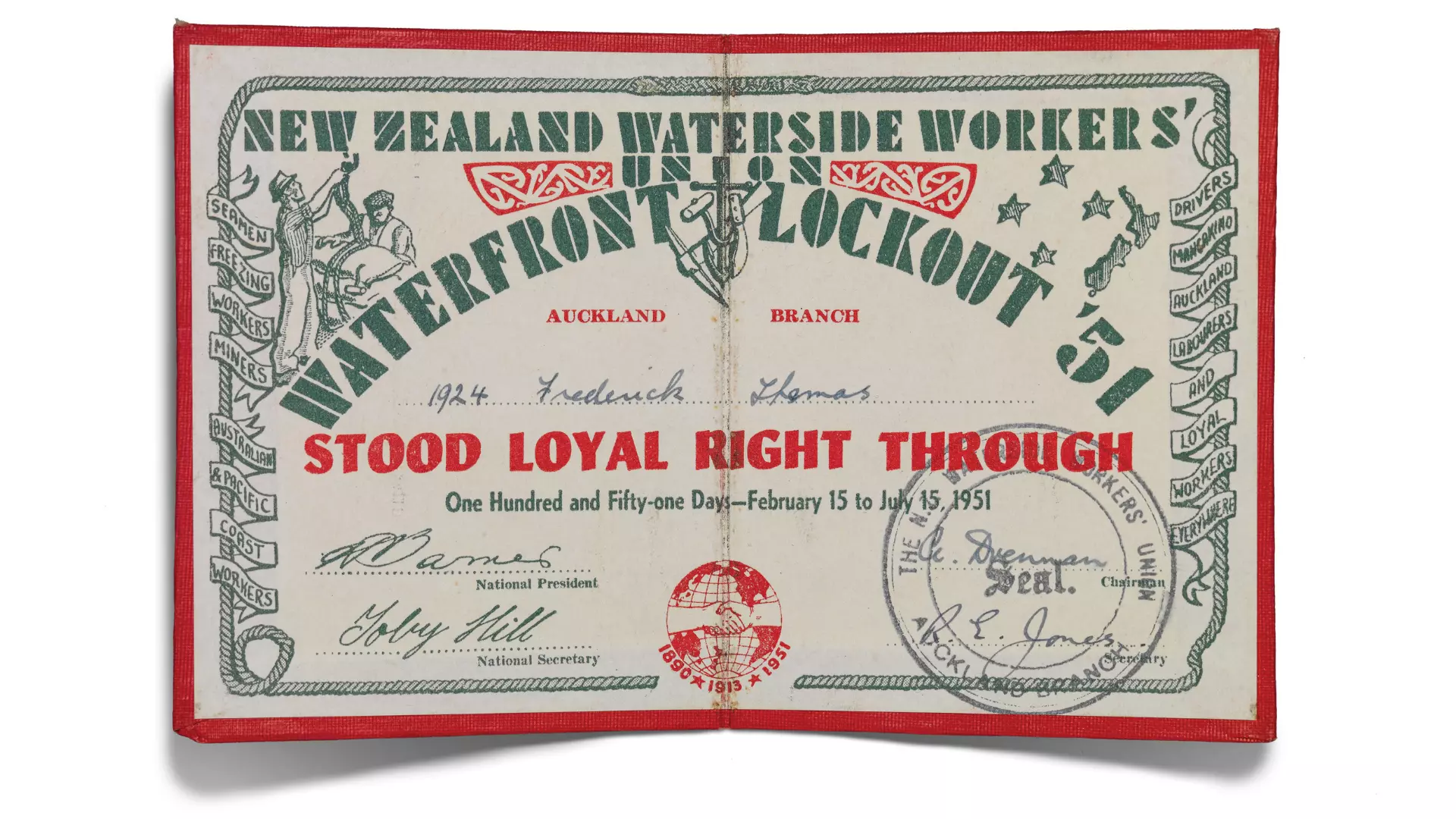

Behind the frontlines of the 1951 waterfront dispute were networks of committees that helped sustain one of the most significant industrial struggles in Aotearoa’s history.
Often referred to collectively as the 51 Lockout Committees, these groups played a crucial role during the 151-day confrontation, organising resistance, supporting families and keeping communities connected at a time of intense political pressure.
When waterside workers were locked out after refusing overtime in a dispute over pay, local branch committees of the Waterside Workers’ Union became the backbone of the movement. From Auckland to Lyttelton and Napier, these committees coordinated strike action, distributed food and resources, and ensured communication continued despite strict government controls.
Their work became even more critical after a state of emergency was declared, with regulations introduced that censored media, restricted gatherings and made it illegal to provide support to locked-out workers and their families. In response, committees operated under increasing scrutiny, often relying on community networks to quietly maintain support systems.
The dispute quickly grew beyond the wharves, with miners, seamen and other workers joining in solidarity, swelling numbers to more than 20,000 at its peak. Committees helped manage this wider mobilisation, reinforcing unity across the labour movement during a deeply polarising period.
In the decades since, the legacy of those organising bodies has been preserved through reunion committees and historical projects. Groups such as the Auckland 1951 Reunion Committee and the Trade Union History Project have documented the experiences of those involved, ensuring the stories of the lockout continue to be shared.
Commemorations marking the 75th anniversary in 2026 have highlighted not just the workers, but also the whānau and communities who stood firm throughout the five-month struggle.
Today, the story of the 51 Lockout Committees remains a powerful reminder of collective action, resilience and the role of community organisation in times of conflict.
#NZHistory #WaterfrontDispute #WorkersRights #UnionHistory #Aotearoa #LabourMovement #Whānau


